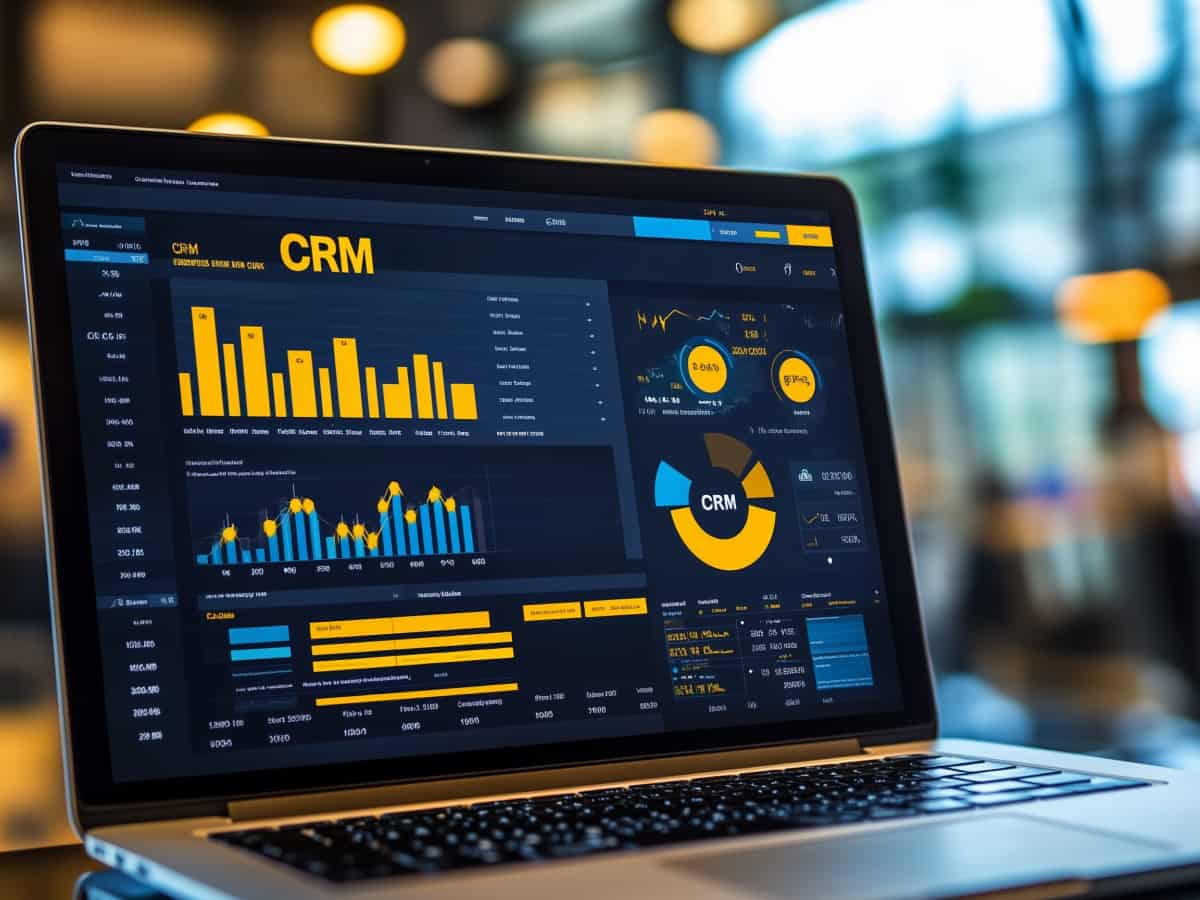
AI CRM tools in 2026 are doing much more than storing contact records and tracking deals. The best platforms now help businesses qualify leads, score opportunities, enrich contact data, automate outreach, forecast revenue, recommend next actions, and give sales teams a faster path from prospect to customer. In other words, a CRM is no longer just a database. It is becoming an active revenue system.
That shift matters because modern sales teams face two common problems at once. First, they have too much data and not enough clarity. Second, they have too many repetitive tasks that slow down pipeline growth. AI CRM tools solve both issues by helping teams prioritize the right leads, automate routine follow-ups, surface insights from customer interactions, and keep the sales process moving without so much manual work.
The best AI CRM for your business depends on what kind of sales engine you run. Some tools are better for all-in-one inbound growth, some are stronger for outbound prospecting, and others are designed for enterprise forecasting and operational complexity. In 2026, the top names in this category include HubSpot, Salesforce, monday CRM, Pipedrive, Zoho CRM, Apollo.io, and ZoomInfo, each with a distinct strength.
Why AI matters in CRM now
Traditional CRM software often failed because teams saw it as a place to update records rather than a tool that actively helped them sell. AI changes that model. Instead of only storing information, AI CRM tools can now detect patterns, predict deal likelihood, identify high-intent leads, suggest follow-ups, draft outreach, and even automate parts of lead qualification.
This matters most for lead generation and sales efficiency. A business does not just need more leads; it needs better leads, faster responses, and cleaner prioritization. AI helps by ranking prospects, enriching records with firmographic or behavioral data, and flagging the opportunities most likely to convert. That reduces wasted effort and lets teams spend more time on the deals that matter.
For small and mid-sized businesses, this can create major leverage. A lean sales team can behave more like a much larger one when AI handles admin work, lead routing, and early-stage prioritization. For enterprise teams, AI becomes even more valuable because complexity increases across territories, stakeholders, buying groups, and revenue forecasting.
HubSpot: best all-in-one AI CRM
HubSpot remains one of the strongest overall AI CRM choices for sales and lead generation, especially for growing businesses that want marketing, sales, and service connected in one system. Multiple 2026 sources highlight HubSpot’s AI-driven lead scoring, automation, lifecycle management, and user-friendly interface, while sales AI roundups frequently describe it as the best all-in-one CRM with built-in AI for many teams.
Its biggest advantage is integration across the revenue cycle. Leads captured through forms, ads, email, or content can move directly into the CRM, where HubSpot’s AI helps score, segment, and prioritize them. That unified model is especially useful for companies that rely on inbound marketing and want fewer disconnects between lead generation and sales follow-up.
HubSpot is particularly attractive for startups, SaaS companies, agencies, and growth-stage B2B teams. It may not offer the deepest enterprise complexity of Salesforce, but for many businesses it provides the best balance of usability, automation, and commercial value.
Salesforce: best for enterprise sales intelligence
Salesforce remains the dominant enterprise CRM and one of the strongest AI-driven platforms for large-scale sales organizations. Current 2026 lead generation and sales roundups consistently point to Einstein AI as a major differentiator, especially for opportunity scoring, lead prioritization, forecasting, and pipeline intelligence.
Its strength comes from depth and scale. Salesforce is ideal for organizations with complex sales motions, large datasets, multiple teams, and advanced customization needs. Einstein can analyze CRM activity, surface win probability signals, and support forecasting in ways that are especially useful for larger revenue operations.
The trade-off is that Salesforce can be too heavy for smaller businesses that just want simplicity and speed. It is powerful, but that power usually pays off most when a company has enough complexity to justify enterprise-grade infrastructure.
monday CRM: best for built-in workflow simplicity
monday CRM is gaining attention in 2026 because it brings AI directly into lead management workflows without making teams manage heavy technical complexity. Monday’s own comparison of AI SDR and lead generation platforms positions monday CRM as a strong choice for revenue teams that want AI-powered lead capture, qualification, and enrichment integrated into daily CRM work.
This matters because many teams are overwhelmed not by lack of features but by too many disconnected tools. monday CRM focuses on capturing leads from forms and campaigns, enriching them with data such as Crunchbase information, assigning them intelligently, and moving them through workflows with less friction. Its starting price in that roundup is listed at $12 per user per month, which also makes it accessible relative to heavier systems.
For businesses that want a cleaner operational experience, monday CRM can be a compelling choice. It is especially useful for small to mid-sized revenue teams that value visual workflows, ease of use, and built-in AI support over deep enterprise customization.
Pipedrive: best for next-step selling
Pipedrive remains one of the most practical AI CRM options for sales teams that want clear pipelines and active selling guidance. A 2026 expert roundup highlights Pipedrive’s AI-generated reports, predictive lead and deal scoring, AI email drafting and summarizing, and AI Sales Assistant, which monitors pipelines and offers next-best-action recommendations in real time.
That “what should I do next?” layer is particularly valuable in sales. Many deals do not die because there is no data; they die because reps do not act at the right time. Pipedrive’s AI assistant helps by flagging at-risk deals, recommending follow-ups, and surfacing useful insights from pipeline behavior.
For SMB sales teams and founder-led sales environments, that simplicity is powerful. Pipedrive may not be the broadest all-in-one growth platform, but it is one of the strongest tools for keeping pipeline movement visible and practical.
Zoho CRM: best value for feature depth
Zoho CRM continues to stand out as a high-value option because it delivers a broad feature set with serious AI capabilities. In 2026 comparisons, Zoho’s Zia AI assistant is associated with lead scoring, churn prediction, win-probability and revenue forecasting, sentiment analysis, workflow suggestions, and business intelligence support.
That makes Zoho attractive for companies that want sophisticated CRM intelligence without paying enterprise-level prices. It also benefits from the broader Zoho ecosystem, which means businesses can connect CRM activity with campaigns, support, accounting, and other business functions more naturally.
Zoho is often a strong fit for SMBs and mid-market teams that need rich functionality and operational flexibility. It may not have the same market prestige as Salesforce or HubSpot, but in practical value terms it is one of the strongest contenders.
Apollo.io and ZoomInfo: best for prospecting-led teams
Not every sales team needs a classic CRM-first solution. Some teams care most about outbound lead generation, contact discovery, enrichment, and sequence automation. That is where Apollo.io and ZoomInfo become especially important.
Apollo.io is repeatedly highlighted in 2026 sales roundups for combining a massive B2B contact database, natural-language prospect search, AI-powered outreach, multichannel sequencing, and lead scoring. Monday’s comparison says it gives access to more than 275 million verified B2B contacts and supports automated sequences across email and LinkedIn. That makes it especially attractive for growing SaaS teams and outbound-heavy B2B sales organizations.
ZoomInfo plays a similar but often more enterprise-oriented role. Lead generation guides describe it as one of the strongest platforms for company intelligence, buyer intent signals, predictive prioritization, and AI-driven contact recommendations. It is best suited to teams running serious outbound or account-based programs where data quality and intent signals make a large difference.
Strictly speaking, Apollo and ZoomInfo are not always the best standalone CRMs for every company. But as AI-powered lead generation engines connected to CRM workflows, they can dramatically improve prospecting quality and pipeline creation.
Which tool fits which business
The best AI CRM depends on your selling model:
- Choose HubSpot if you want an all-in-one platform that connects inbound marketing, sales, and service with strong built-in AI.
- Choose Salesforce if you run a complex or enterprise-scale revenue operation and need advanced forecasting, opportunity scoring, and customization.
- Choose monday CRM if you want accessible AI-powered lead workflows inside a simpler CRM experience.
- Choose Pipedrive if your team wants a visual sales process with practical next-step guidance and strong pipeline focus.
- Choose Zoho CRM if you want broad feature depth, solid AI, and strong overall value.
- Choose Apollo.io or ZoomInfo if outbound prospecting, enrichment, and contact intelligence are central to your lead generation strategy.
This distinction matters because many businesses choose CRMs based on brand familiarity rather than sales process fit. A startup with content-driven inbound leads may thrive in HubSpot, while an outbound-heavy B2B team may get more pipeline value from Apollo plus a lighter CRM. A large enterprise with forecasting complexity may need Salesforce even if it is harder to manage.
What to look for before paying
Before paying for an AI CRM, focus on the features that actually affect revenue:
- Lead scoring and prioritization, because not all leads deserve equal attention.
- Enrichment and intent data, because better records improve targeting and outreach quality.
- Workflow automation, because repetitive admin work slows selling.
- AI drafting and summarization, because faster communication improves rep efficiency.
- Forecasting and pipeline intelligence, especially for teams with longer or more complex sales cycles.
In 2026, the best AI CRM tools are the ones that do more than organize contacts. They help revenue teams decide who to contact, what to say, when to follow up, and where the real pipeline opportunities are. That is why AI CRM is becoming one of the most important categories in modern sales technology: it turns customer data into selling action.